Showing posts with label 2012. Show all posts

Monday, July 22, 2013

Renault Koleos, 2012


  •  Renault Koleos, 2012

A renewed version of Renault Koleos is to be released in late 2011. The chief changes concern the model's exterior styling and interior trim, plus appreciable CO2 and fuel consumption savings in the case of its diesel engines. The model reasserts its high-end status by building on the strengths that were widely acclaimed at the time of its launch in 2008, namely its remarkable comfort, versatility and modularity, as well as the speed with which owners are able to familiarise themselves with their new car.

Robust, more dynamic looks
The front end of Renault Koleos has been revised with a view to reasserting its forceful character. The air-intakes positioned either side of the Renault logo on the previous version have made way for an elegant chrome grille, while the dynamism of the model has been reinforced by new, slimmer headlights. The more modern door mirrors now incorporate LED indicators.

The side view expresses the robustness associated with the world of 4x4 motoring thanks to cues such as high ground clearance, prominent wheel arches and new, modern, sporty wheels. The initial version's distinctive rear-end styling has been carried over, including the steeply-raked rear window which suggests forward movement and provides the model with a particularly original stance. New Renault Koleos will also be available in a new dynamic body colour: Cayenne Orange.

Careful attention has been paid to the quality and finish of the cabin. A selection of new upholsteries and trims have enhanced the original vehicle's elegance and refinement, while the dashboard and instrument lighting have evolved, too, with the introduction of a modern, more stylish speedometer housing and display.

CO2 emissions savings for a safe crossover which is at home on all types of road

Depending on market, new Renault Koleos can be ordered with the 150hp or 175hp version of the M9R diesel engine, or with the 170hp (TR25) petrol engine. All three deliver dynamic, high-quality performance under the bonnet of this crossover which measures 4.52m in length and 1.85m in width.

Work on the vehicle, engine and gearbox has produced appreciable CO2 emissions savings for the diesel versions of Koleos. The CO2 emissions of the 4x2 version powered by the dCi 150 engine are just 148g/km, which means it is no longer subject to the eco-surtax applicable in France. The emissions of the bigger dCi 175 engine have also been reduced to 166g/km.

The versatility of new Koleos means that it is as much in its element on city streets as it is on twisty country lanes. The Nissan-developed all-wheel drive transmission of the 4x4 version ensures genuine off-road ability, while the model's carefully-honed volumes, precise steering and stability ensure surefooted agile handling in and about town.

Meanwhile, Renault's expertise in the realm of active and passive safety saw the brand's crossover earn a five-star EuroNCAP crash test rating at the time of its launch thanks to features such as ESP, emergency brake assist, programmed structural deformation, six airbags and seat belt pretensioners.

?Exemplary comfort and modularity, plus high-end technologies
New Renault Koleos boasts segment-leading cabin space and comfort, while the interior layout benefits from the extensive expertise of the MPV's pioneer. Everything has been thought through to make sure that all five occupants feel perfectly at ease, including segment-topping headroom and knee room in the front, and an excellent balance between elbow room and headroom for rear passengers.

Practical and modular. The interior of new Renault Koleos features stowage space of up to 70 litres. Access to the large boot (450dm3 VDA) is facilitated by the split-opening tailgate, the bottom section of which forms a robust bench when lowered. The 60/40-split rear bench seat is equipped with the Easy-Estate system, which means it can be folded in one quick movement to free up a flat floor and boot space of 1,380dm3 VDA. The panoramic opening roof makes the cabin even brighter and more enjoyable.

Technologies for enhanced comfort and safety. New Renault Koleos is available with a raft of useful, reassuring and user-friendly high-end features, including hands-free entry and ignition, an electronic parking brake, automatic headlight and windscreen wiper activation and a joystick-operated Carminat TomTom navigation system. The 4x4 versions of new Renault Koleos also incorporate Hill Start Assist and Hill Descent Control.

Use of the audio, navigation and dual-zone climate control systems is perfectly intuitive and their controls fall readily to hand. Meanwhile, careful attention has been paid to eliminating mechanical and road noise which means that occupants are able to fully appreciate the premium Bose® sound audio system which has been tailor-engineered to match the characteristics of the cabin.

Renault Koleos: an international calling and an image-building flagship for the brand

Renault Koleos is marketed in some 40 countries on five continents. It was the first vehicle to benefit from Alliance-wide input since it was designed by Renault, features Nissan technologies and is manufactured at the Renault Samsung Motors plant in Busan, South Korea. Thanks to this fruitful collaboration, it has emerged as a spearhead of the Renault range in several markets.

Renault's first crossover has carved out a place in what is a constantly expanding and fiercely competitive segment:
    An international calling. Thanks toKoleos, Renault enjoys a real place in this growing, image-enhancing segment, notably in China and Latin America. More than 70 percent of Koleos sales were outside of Europe in 2010.
    In Europe, where its strengths are readily recognised,Koleos has succeeded in defending its position. Indeed, sales have increased significantly over the first four months of 2011 with a 65 percent rise in Koleos registrations across Europe between January and April over the same period in 2010.

Sunday, July 21, 2013

Porsche 911 GT3 Cup, 2012


  •  Porsche 911 GT3 Cup, 2012

It is the most successful race car on earth: The Porsche 911 GT3 Cup. With over 2,200 units sold, it is the undisputed number one amongst customer racing teams all over the world. Now, the Porsche 911 GT3 Cup features a 100-litre FT3 safety fuel tank, which is filled via an opening in the front bonnet. Compared to its predecessor, the vehicle is now suitable for an even wider range of endurance racing. Moreover, the new fuel tank contributes to a further improvement of the high safety standards.

The 2012-spec Porsche 911 GT3 Cup is based on the lightweight 911 GT3 RS (997) street sports car. The power unit is largely identical to the production engine of the 911 GT3 RS with the same output of 450 bhp and the same maximum engine speed of 8,500 rpm. A race exhaust system with a controlled catalytic converter keeps emissions to a minimum.

The flared wheel arches at the front axle accommodate light alloy rims measuring 9.5Jx18 with 25/64-18 Michelin race tyres. The light alloy rims at the rear measure 12Jx18 with 30/68-18 tyres. Depending on the type of racing, the Porsche 911 GT3 Cup features different rim specifications. The blade-type anti-roll bars at the front and rear are adjustable in seven positions allowing an extremely precise set-up for each race track. Exclusive to the Porsche Mobil1 Supercup which runs as support to Formula 1 is the PCCB Porsche Ceramic Composite Brake. This is also available for Porsche's road models. Compared to the composite cast brakes in the Carrera Cups and the GT3 Cup Challenges, PCCB reduces the weight of the car by around 20 kilograms.

The cockpit of the Porsche 911 GT3 Cup caters for the needs of the driver. The controls for the info display are positioned on the steering wheel which houses six switches. As in the production car, the reach and height of the steering wheel can be adjusted. The Porsche 911 GT3 Cup will be delivered to teams around the world from September and run in this specification for the 2012 and 2013 race seasons in selected one-make cup series. The price is 161,750 Euro plus value-added tax of the respective countries.

Currently, the Porsche 911 GT3 Cup competes in 19 Porsche brand trophy series worldwide. Moreover, it is run in various GT race series and at long distance events. The 911 GT3 Cup is the basis model of Porsche's racing vehicle range. Additionally, Porsche Motorsport offers the 911 GT3 R for championships complying with GT3 regulations and the 911 GT3 RSR built according to GT2 rules.

Wednesday, July 17, 2013

Opel Astra GTC, 2012


  •  Opel Astra GTC, 2012

The new Opel Astra GTC´s sculpted shapes with precise accents and dramatic proportions make it the ultimate expression of Opel´s design language. And on the road, all Opel Astra GTC versions benefit from a premium front axle layout with HiPerStrut - High Performance Strut - that ideally combines with the clever Opel patented Watt's link rear axle to provide unmatched stability and the sharpest driving precision. Other innovations in the new Astra GTC include driver assistance systems based on the second generation Opel Eye front camera with expanded functionality and the new, fourth generation Bi-Xenon Advanced Forward Lighting (AFL+).

Unlike many three-door versions of existing compact hatches, the GTC will be a standalone model in Opel's range and the ultimate Astra in design and driving dynamics. It does not share any exterior element with other members of the Astra family, except for the outside rear view mirror housing and the rod antenna. Six of the seven 17- to 20-inch wheel designs on offer are also GTC-only features.

Also exclusive for the new Opel Astra GTC is the panoramic windscreen. For the unique feature, which successfully made its production debut 2006 in the previous Astra GTC generation, Opel engineers filed a total of 11 patents during its development. The large panoramic windshield extends seamlessly from the hood up into the roof as far as the B-pillar. With no cross-member to spoil the view, it offers driver and passengers a unique driving experience and a completely new sense of space and visibility with an almost unlimited field of vision, similar to the view from a jetplane cockpit.

Sharp looks enhance Opel's design language
The Opel Astra GTC manages to combine the best of both worlds: on the one hand passion and emotion, on the other a high degree of utility in day to day usage. Its sleek looks are very striking and are the very essence of Opel's design language. The atmosphere of the roomy interior is sporty and classy. The loading capacity (1.165 liters) is considerably greater than that of its direct competitors. "The Astra GTC expresses our passion for cars," the Opel/Vauxhall Vice President for Design, Mark Adams, explains. "This represents our most emotional vehicle so far, yet it does not sacrifice on the emotional with the functional side."

In contrast to many other coupés which are often merely hatchback variants of a sedan, the Opel Astra GTC is a standalone car within the Opel product spectrum. It is the sharpest looking Astra when it comes to design and the very essence of what a coupé should be, because of its extraordinary usefulness in day to day situations. None of the components in the Astra GTC have been lifted from other Astras, apart from the mounting of the rear mirror and the aerial.

The design team was tasked with giving a new and dynamic expression of its mission statement of "sculptural artistry meets German precision". They came up with a car that is as uncompromising as a wild cat, crouching down on the street, ready to leap. However, at the same time it can be gentle and playful. "The essence of the new Opel design language is to reduce everything to the maximum. And the Opel Astra GTC is our most radical interpretation of that," says the Opel Exterior Design Director, Malcolm Ward. "We wanted to create a really attractive car made up of only a few key dynamic lines."

There are only three lines that create tension and define the outline of the silhouette.

A fine, crisp line sweeps downward from the front door to the bottom of the rear fender and energizes the body side. A second line encapsulates the door handle and stretches to the rear, emphasizing the GTC's dramatic stance by spreading the surfaces to a fine undercut and a broad shoulder. The third line follows the clean, sporty silhouette of the roof.

No compromising on design
The designers' unwillingness to compromise, particularly when designing the GTC shoulder area, put the whole engineering team up against a challenge. The sheet metal sections needed to be pressed unusually deeply to enable realization of the wide shoulder and dominant wheelhouses from the sketch and clay model. Just a few years ago, this would have been technically impossible. A "real" door made of steel was built earlier than usual, so that new production methods could be tested - and to help determine if the final car could do justice to the initial vision. And it did.

Panoramic windscreen offers unique vistas
The Opel Astra GTC is a standalone car in its own right and its striking design re-enforces that impression. The Vice President of Design, Mark Adams, wants to avoid what he calls the "Russian Dolls" effect, where all models look the same and just differ in size. He states that "It is important that each vehicle in our portfolio has its own personality, because each has a unique role in our portfolio and appeals to different customers."

Therefore the panoramic windscreen was reserved exclusively for the Opel Astra GTC within the Astra family. The windscreen gives the racy compact coupé a dynamic look and a luxurious note. The large front windscreen stretches all the way to the middle of the car roof and gives the driver and the passengers an extraordinary visual, space and driving experience. In contrast to other glass roof solutions, in this case there is no transverse spar that reduces visibility. On the contrary, the roof boosts the roominess of the interior, thus improving the driving experience. The driver, his co-pilot and the passengers in the rear are able to enjoy a vista, similar to what pilots experience under the light plane canopies.

From the outside, the panoramic windscreen together with its black metallic steel roof looks like a continuous surface. The A and B pillars are also coated in black as well as the roof liner, reinforcing the impression of a homogenous surface. In the event of very powerful sun rays a roller blind can be lowered inside the cabin which sits under the panoramic glass. This helps create a pleasant atmosphere. The device which is continuously variable can be easily adjusted and then may be attached with a turning handle. The solar protection comes complete with an integrated sun visor which even in its opened state disappears behind the rear roof component.

Athletic powerhouse with practical strengths
In contrast to its competitors, the Opel Astra GTC is not handicapped by its coupé pedigree to deal with every situations on the road. The flexible boot that can load between 380 and 1.165 liters, comes in addition to the room for five passengers. The storage space inside the cabin was increased by 50 percent in comparison to its predecessor. In the Cosmo variant, the electric parking brake (EPB) is a basic feature and contributes to an efficient space distribution in the Opel Astra GTC. Specifically in the central console, where storage capacity is normally much in demand, the EPB pays off. It means that depending on which features have been added to the car, there are up to 19 storage facilities on board.

The flowing and sculptural shape of the outside body work is continued on the inside with curved surfaces and circular features. The wing-like instrument panel embraces the front seats in a wide arc. Similar to wing tips the upper segments of the door panels give the impression of a broad span that offers protection. The sickle shape, associated with Opel, is also reflected in the design features, for example in the shape of the shiny, chrome door knobs and the gear stick cover. The elegant central console has been fitted with a flat angle, creating a harmonious, flowing transition from the dash board to the gear box.

This in turn enhances the roominess of the interior. The overall atmosphere is very pleasant thanks to décor details such as the chrome instrument fittings and knobs or the juxtaposition of the user-friendly surfaces and the pleasant back-lighting.

New materials, colors and patterns give a further boost to the very sporty nature of the Opel Astra GTC. For example, the color combinations include Imola, Red/Morrocana, Black or Imola, Black/Morrocana, Black for the middle seat segments and the side panels. They are the ideal combination with the décor panels which are painted in piano-lacquer style. Further leather accessories are also available, including the elegant velour leather "Dinamica-Black". The sports steering wheel which is easy to grip is part of the basic features and fits perfectly with the nature of the Opel Astra GTC. The front seats have the highest degree of flexibility in the segment in order to do justice to every style of driver. Another optional extra is the ergonomic sports seat which can be adjusted in eight different positions. The seat carries the quality seal from the German healthy back association "Aktion Gesunder Rücken e.V."

Bespoke layout for the ultimate driving experience
Like its predecessor, the new Astra GTC is a standalone model in its own right within the Opel product spectrum. Its breathtaking looks and dynamic handling were the focal points at the development stage. The bespoke chassis layout of the sporty compact car delivers a sense of fun and precise handling. The chassis of the new GTC is 15 millimeters lower than that of the 5-door Astra, while the wheelbase has grown by 10mm, from 2685mm to 2695mm. Both tracks are wider, too, at 1584mm (+40mm) front and 1588mm (+30mm) rear. The end result is that the Opel Astra GTC has a strong presence on the road.

High-tech front suspension appeals to sports fans
Right from the start of the GTC's development program the target was to deliver a driver-oriented feel to the car. The precise response of steering and dampers should not reduce comfort and performance in daily traffic. The solution is called HiPerStrut (High-Performance Strut). In all its versions, the Opel Astra GTC possesses this exclusive high-performance suspension strut. It is based on the system currently seen on the 239 kW/325 hp Insignia OPC. In its newly adapted form to the compact coupe, the new front suspension provides better handling and more responsive steering - just what sports car drivers are looking for. The HiPerStrut uses the same pick up points, but achieves a reduction of the inclination angle by 44 percent and shortens the spindle length (kingpin offset) by 46 percent with a reduced lever arm. This helps prevent torque-steer - a trait of many powerful front-wheel-drive cars - allowing drivers to make more use of the GTC's performance without the steering being corrupted.

Rear axle with Watt's link optimizes comfort and car handling
The combination of compound-crank axle and Watt's link which has proven successful in the 5-door Astra, is also being used in the Opel Astra GTC. This rear axle system is lighter and more compact than a multi-link rear suspension and provides better lateral stability. The Watt's link is fitted to a small cross-member attached to the underside of the car, just behind the rear wheel center line. It comprises a short, pivoting center link with a ball joint at each end, to which the lateral links from the wheels are bolted. In a straight line, the set up ensures excellent stability, but during cornering it minimizes lateral deflection in the same way a modern multi-link system would do. Opel's engineers estimate that the linkage absorbs around 80 percent of all lateral loads on the rear suspension. In addition, the Watt's link allows for softer bushings, which no longer have to compensate for toe changes at the rear of the car, and thus there is a reduction in annoying factors such as vibration from the road surface and noise level.

In summary: the unique combination of lateral and camber stiffness, especially when driving in bends, give the Opel Astra GTC steering precision and stability. Friction is reduced within the suspension, while elasticity in the direction of travel mean the vehicle is well sprung and ensures good absorption.

Mechatronic FlexRide boosts safety and driving fun
The lay out of the Astra GTC chassis has been designed to perfectly integrate Opel's intelligent, fully-adaptive FlexRide chassis control system. FlexRide links the separate electronic driving assistance components to one another, including the ESC stability control and the adaptive dampers, CDC. In this way, the chassis automatically adapts to road conditions, cornering speed, vehicle movements and individual driving style. Better handling and vehicle balance also enhance driving safety in emergency situations. In addition, the driver can chose from three different FlexRide settings at the touch of a button: one can choose anytime between the balanced Standard mode, the comfort-oriented "Tour" mode or the more active "Sport" mode.

Precise steering with electric power steering
Precision, feedback and confidence: these were the three target elements for the GTC's bespoke steering program. The challenge was to optimize the Rack-assist electric power steering REPS in such a way that it would feel lighter at lower speeds while at the same time offering closer contact with the road surface at higher speeds. The Opel Astra GTC uses a rack and pinion steering system with speed sensitive assistance. But in order to provide drivers with a more precise steering response, the system's electric motor was mounted directly on the steering rack, as opposed to the base of the steering column. At higher speeds, the power steering assistance is automatically reduced so that the driver can steer in a more precise fashion than with conventional power steering. The second important benefit is that, because it does not require an energy consuming hydraulic pump and responds directly to the amount of power needed at any speed, fuel consumption is also reduced.

Saturday, July 13, 2013

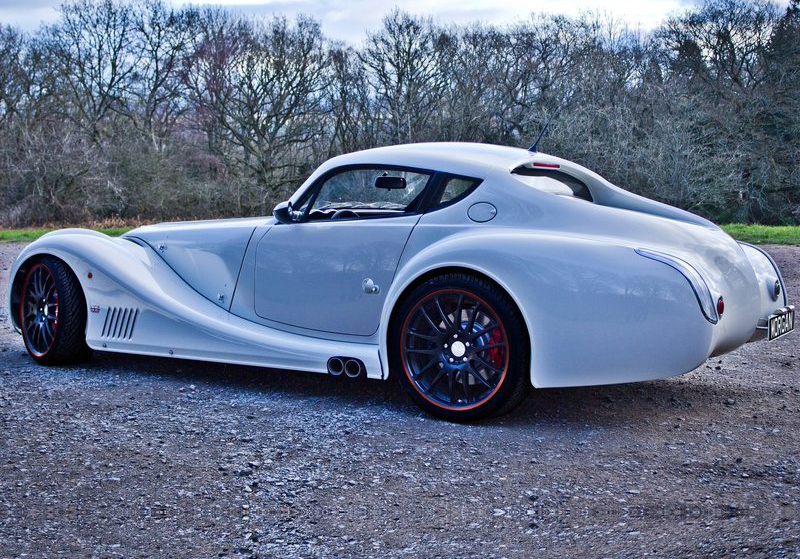
Morgan Aero Coupe, 2012


  •  Morgan Aero Coupe, 2012

The Morgan Aero Coupe is an advanced supercar designed for practical long distance touring. The strong and rigid vehicle is inspired by the GT3 Aero that has enjoyed a number of racing victories. The enclosed cockpit of the Coupe body style takes the Aero experience onto the next level in terms of comfort with a large and secure boot in the rear for luggage.

Constructed entirely from aluminium which is a third of the weight of steel, the Morgan Aero Coupe combines performance with environmental responsibility and a high level of safety. The fixed roof and enclosed cabin give a sense of security and silence which is only interrupted by the intoxicating purr of the BMW V8. A stiff aluminium chassis cradles the 4.8 litre BMW V8 engine and the 6 speed manual or automatic transmission. The individual alloy parts are formed from tooling and hand assembled by skilled craftsmen at the foot of the Malvern hills. The pioneering Aero platform continues to demonstrate British engineering at its very best and over 1000 examples of this technology are in regular use by drivers around the world.

A Morgan Aero Coupe is a car that is designed to be durable with proven chemical coating and treatments of the rigid bonded chassis and body. Following research by the company on the road, the race track and in automotive laboratories the design of this versatile platform has been consistently improved and re-engineered. Now the Morgan Motor Company is a class leader in this chassis and car body technology.

The cockpit of the Morgan Aero Coupe is a delightful place to be. The sensation of speed is exaggerated by the enticing view down the elegant bonnet. The view to the rear makes the car easy to manoeuvre and to park. Every detail is special to Morgan and is a pleasure to behold. Ash hardwood surrounding the cockpit and doors can be hand polished in a colour of your choosing. The controls are luxurious to touch. The leather work is stitched with twin needles and combined with suede effect panels for contrast and a dynamic sporty feel. Pressure point reclining seats support the occupants strongly and great care has been taken to ensure that the driver has a masterful position from which to control the car. Reliability is ensured with the BMW V8 and a six speed automatic transmission. This can be operated in two modes, 'Sport' and 'Auto'. In 'Sport' mode the engine holds its gear to 6500 rpm and 'blips' the throttle before making a down shift. The power to weight ratio is around 320 bhp per tonne and a 0-62 mph (0-100 km/h) of 4.5 seconds combined with a top speed of 170 mph (273 km/h) is effortlessly achievable. The Morgan Aero Coupe comes with a full specification as standard. A powerful standard sound system creates audio definition as crisp as the lines of the exterior. However the Morgan Aero Coupe can also be customized to a person's individual taste and the choices are virtually inexhaustible.

Technical Specification
    Manual Transmission
        Engine: 4799 cc v8
        Max power: 270 kW (367 bhp) or 291 kW (390 bhp) with sports exhaust
        Max torque: 490 Nm (370 lb/ft)
        Power to Weight: 311 bhp/tonne or 330 bhp/tonne with sports exhaust
        Performance: 0-62 mph (100 km/h) in 4.5 seconds
        Top speed: 170 mph (273 km/h)
        Fuel tank: 55 litres
        Fuel consumption
            Urban: 16 mpg (18.2 l / 100km)
            Extra urban: 32 mpg (8.7 l / 100km)
            Combined: 23 mpg (12.1 l / 100km)
        CO2: 282 g/km
        Chassis: Aluminium bonded and riveted

        Dimensions
            Length: 4147 mm
            Width: 1751 mm
            Height: 1248 mm
            Dry weight: 1175 kg

    Automatic Transmission
        Engine: 4799 cc v8
        Max power: 270 kW (368 bhp) 291 kW (390 bhp) with sports exhaust
        Max torque: 490 Nm (370 lb/ft)
        Power to weight: 312 bhp / tonne
        Performance: 0-62 mph (100 km/h) in 4.2 seconds
        Top speed 170 mph (273 kph)
        Fuel tank: 55 litres
        Fuel consumption
            Urban: 17 mpg (16.4 l / 100km)
            Extra urban: 36 mpg (7.9 l / 100km)
            Combined: 26 mpg (11.0 l / 100km)
        CO2: 256 g/km
        Chassis: Aluminium bonded and riveted
        Dimensions
            Length: 4147 mm
            Width: 1751 mm
            Height: 1248 mm
            Dry weight: 1180 kg

Friday, July 12, 2013

Mitsubishi i-MiEV US Version, 2012


  •  Mitsubishi i-MiEV US Version, 2012

Building on the company's more than 35 years of involvement in advanced electric vehicle development, Mitsubishi Motors has unveiled its first all-electric production vehicle bound for the North American market - the Mitsubishi i.

Based on the very popular gasoline-powered Mitsubishi i minicar in the Japanese market, this roomy and practical four-door 2012 model serves as the basis for the new 100% battery-powered Mitsubishi i for the North American market. The zero tailpipe emission Mitsubishi i will be the first North American production vehicle to be powered by Mitsubishi innovative Electric Vehicle (MiEV) technology - cutting edge drivetrain engineering that will serve as the basis for future ultra-environmentally-friendly vehicles from the company. Gone are conventional automotive systems including a gasoline engine, transmission and a fuel tank, having been replaced by advanced components including a lithium-ion battery system, electric motor and an efficient battery charging system in the all-new Mitsubishi i. This electric vehicle has already proved itself a viable and reliable form of transportation as Mitsubishi has been selling the car in its home market since the summer of 2009; production has already commenced for the European-spec i-MiEV.

Mitsubishi anticipates an initial roll out of the Mitsubishi i to its dealership network in the western United States (specifically California, Oregon, Washington and Hawaii) in November 2011, with entry into the northeastern market to follow by March 2012 and nationwide availability by the end of 2012. The vehicle's MSRP is expected to be around $30,000, not including Federal and available state financial incentives.

The new production Mitsubishi i bound for the North American market further differentiates itself from its Japanese- and European-spec versions with a retooled, larger body to provide even more interior comfort for four adults, along with new North American-spec bumpers front and rear for enhanced protection in the event of a collision. Other noteworthy safety measures on the North American-spec vehicle include airbags that protect passengers and control deployment force, Active Stability Control (ASC) and a Tire Pressure Monitoring System (TPMS) - all included as standard equipment.

Easier on the Environment
Its extremely efficient all-electric powertrain, the Mitsubishi i produces zero on-road CO2, making it a zero emissions vehicle. What's more, when factoring in the CO2 emissions produced by the power plants that generated the electricity that provides the energy for the Mitsubishi i, this revolutionary Mitsubishi production car only produces about 30% of the CO2 emitted by the 660cc gasoline engine that powers the non-electric-version of the car in its home market. And the reduction in CO2 becomes even more statistically significant considering that the 660cc gasoline engine found in the Japanese market is only about one-third of the displacement of the typical four-cylinder gasoline engine powering cars in the North American market.

Additional energy efficiency can be wrung from the "i" model's electric powertrain thanks to Eco (Economy) and Brake driving modes that supplement the vehicle's standard Drive mode. The Eco mode limits excessive power usage from reaching the motor while the Brake mode increases the resistance of the regenerative braking system (especially when driving downhill) to feed even more energy back into the car's bank of lithium-ion batteries.

Low Cost "Fuel" Source
The operating cost per mile of the electrical-powered Mitsubishi i is significantly cheaper than that of a comparable gasoline-powered vehicle. In Japan, the operating cost is only 1/3 that of the 660cc gasoline engine-powered version of the car, and the operating cost can drop even more significantly than that of its internal-combustion sibling by taking advantage of reduced electricity rates by recharging during nighttime or off-peak hours.

Clever Design = Spacious Accommodations, Outstanding Safety
Thanks to the vehicle's excellent packaging and engineering in relation to its size, this uniquely styled automobile provides an excellent level of safety, ample room for four adults plus handy cargo space.

How can a small car possess such ample interior volume? Mitsubishi engineers have cleverly placed the high-capacity lithium-ion batteries beneath the floor, and the electric motor, inverter and battery charger have been located behind and below the rear passenger area. This setup also has the added benefit of lowering the vehicle's center of gravity. Along with the wheels being placed at the farthest corners of the vehicle, this gives the Mitsubishi i exceptional stability along with surprisingly agile handling.

Advanced Electric Powertrain
The power system consists of a permanent magnet synchronous electric motor and a high energy density lithium-ion battery pack that consists of 88 cells (22 modules, 4 battery cells per module) for a maximum battery capacity of 16 kWh. The battery modules can be installed either transversely or vertically; this packaging flexibility allows them to be stored underneath the cabin floor. All 88 cells reside within an extremely sturdy stainless steel capsule to provide maximum protection.

The Mitsubishi i also features a groundbreaking three-way battery charging system that allows the vehicle to be charged using the onboard household charger through either 110V (15A) or 220V (15A) power sources or by a quick-charger system that utilizes a three-phase 220V power supply. The charging times from a very low battery to completely full are approximately 8 hours at 220V and 16 hours at 110V. The three-phase 220V quick-charger can take a low battery all the way up to an 80% battery charge in under a remarkably fast 30 minutes. The three-phase quick-charger makes use of a special outlet that is accessible on the driver's side of the vehicle, while the onboard household charger's outlet is located on the passenger side of the Mitsubishi i.

Strategic Research and Logistical Partners
The Mitsubishi i has undergone several years of exhaust testing and evaluation not only internally by the Japanese auto manufacturer but with several other institutions, including seven utility companies in Japan, as well as prototype evaluation programs with major United States utilities Southern California Edison, Pacific Gas and Electric Company (PG&E), Portland General Electric and the Tennessee Valley Authority.

And in an effort to help expand and improve the logistical side of the electric vehicle ownership experience, Mitsubishi has teamed with corporate titans including consumer electronics retailer Best Buy and leading power management company Eaton Corporation. Best Buy, through its 20,000-plus strong employees in its Geek Squad division, has partnered to provide site analysis and work to manage installation of a Level 2 Charging Station it will sell through its stores for Mitsubishi i owners to use in their own homes. Designed and manufactured by Eaton - a company that has more than 20 years of experience in developing electrical and hybrid power systems for commercial vehicles - this 220V charging station will cut the time it takes to charge the car's batteries in half when compared to a standard 110V electrical outlet.

Mitsubishi i specifications (North American Version)
    Overall length: 144.8"
    Overall width: 62.4"
    Overall height: 63.6"
    Track
        Front: 55.9"
        Rear: 54.3"
    Wheelbase: 100.4"
    Number of passengers: 4
    Vehicle weight: 2584 lbs.
    Motor output: 63 hp
    Motor torque: 133 lb.-ft
    Battery system: 330V lithium-ion
    Drive mode: Mid-engine, rear-wheel drive

Thursday, July 11, 2013

Mini Bayswater, 2012


  •  Mini Bayswater, 2012

The MINI Bayswater wears its inherent sporting élan and extrovert style very much on its sleeve. The Kite Blue metallic exterior paintwork was created exclusively for the special-edition model, as was the interior design and 17-inch light-alloy Sandblast wheels with high-gloss black surfaces and bright machined rim and spoke edges. Midnight Black metallic and Eclipse Grey metallic paint shades can be ordered for the MINI Cooper S and MINI Cooper SD as an alternative to the new, radiant Blue finish. The sporty appearance of the MINI Bayswater is emphasised by the black contrasting roof and the likewise newly created Sport Stripes for the bonnet, which streak dynamically towards the windscreen. The exterior mirror caps carry an identical stripe design - blue on the right-hand side of the car, grey on the left.

"Bayswater" lettering adorns the side indicator surrounds, door sills and seat tags. The Punch Leather seats come in the exclusive colour variant Rocklite Anthracite and include side bolsters sporting a metallic sheen and blue and grey contrast stitching. Two-tone contrast stitching also adorns the gearshift/selector lever and handbrake gaiters.

Other innovative design features in the interior include Piano Black cockpit trim strips, which continue the path set by the Sport Stripes over the bonnet, and the leather Colour Line elements in Rocklite Anthracite, whose classy character is emphasised by black stitching. The same leather variant is also used for the armrests, while the model-specific floor mats have anthracite-coloured edging and blue contrast stitching.

The MINI Bayswater also comes with stainless steel pedals and the Chrome Line Interior package, and includes the Pepper Pack in its range of equipment. Plus, the new special edition can likewise be specified with a wide variety of items from the optional equipment list if further individual touches are desired.

In keeping with its sporting charisma, the MINI Bayswater lines up for action with powerful engines at its fingertips. Customers can order their MINI Bayswater in MINI Cooper (90 kW/122 hp), MINI Cooper S (135 kW/184 hp), MINI Cooper D (82 kW/112 hp) or MINI Cooper SD (105 kW/143 hp) trim. The special-edition model is also delivered with a six-speed manual gearbox as standard, while a six-speed automatic features in the options range.

The MINI Bayswater takes its name from an extremely vibrant area of London. Located to the west of the city centre - halfway between the shopping hot spots of Knightsbridge and Notting Hill - Bayswater is best known for its unusually high density of bars and restaurants, not to mention the adjacent and no less famous Hyde Park. MINI is therefore returning to the London theme to further accentuate the link with both its home country and the fascination surrounding the London lifestyle. Indeed, both the MINI Bayswater and MINI Baker Street are following in the tyre tracks of a naming tradition begun by the classic Mini and reprised more recently with the MINI Camden, MINI Mayfair and MINI Clubman Hampton special editions.
Related Posts Plugin for WordPress, Blogger...