Showing posts with label 2009. Show all posts

Friday, July 19, 2013

Pontiac G6, 2009


  •  Pontiac G6, 2009

Pontiac has announced that it is ringing in the new year with a fresh look for its best-selling line of G6 mid-size vehicles. Additional fuel-saving powertrain options, more aggressive exterior styling, and a sleek new instrument panel highlight the 2009.5 model Pontiac G6, which begin arriving in the dealerships in January 2009.

All Pontiac G6 models, including sedans, coupes and convertibles, receive the interior upgrades. The uniquely styled Pontiac G6 GXP models will not be affected by the exterior or powertrain changes.

New Powertrain Options
For the first time, the Pontiac G6 coupe available with GM's fuel sipping, 164-horsepower 2.4L four-cylinder Ecotec engine. Linked to a six-speed automatic transmission, the coupe's new powertrain combo is capable of the same 33 miles per gallon fuel efficiency as the current Pontiac G6 sedan and also incorporates a new TAP shift manual shift system with steering wheel-mounted paddle controls.

In those areas where E85 ethanol-based fuel is readily available, a Flex Fuel version of the 219-horsepower 3.5L V6 available as a no-cost alternative to the standard 3.5L engine on all body styles.

The optional 222-horsepower 3.9L V6 for the Pontiac G6 convertible remains unchanged, as does the standard 252-horsepower 3.6L V6 in all GXP models.

Sportier Exterior
Inspired by the sporty front end styling of the new Pontiac G8 performance sedan, the new G6 front fascia features chrome surrounds for the signature Pontiac dual port honeycomb grille. This same grille pattern is carried to an updated lower air dam.

Also new are a revised headlight design with clear park/turn lenses and amber lamps, body color mirrors and painted rockers on the sedan and coupe. An updated spoiler is available for base model sedans and is standard on the GT models.

New rear fascias unique to the sedan and coupe/convertible accommodate both single and dual exhaust, as well as larger diameter exhaust tips.

17-inch chrome wheel covers are now standard equipped on all four-cylinder, six-speed automatic sedans and coupes. An updated 17-inch wheel will be standard as a part of the popular Sun-and-Sound package.

Refreshed Interior
A revised center stack is the most obvious interior enhancement of the 2009.5 model Pontiac G6, sporting all new HVAC controls and an updated AM/FM/CD/MP3 radio with auxiliary audio input jack. The driver information center has moved to the gauge cluster, which has also been enhanced with new graphics and lighting.

The 2009.5 Pontiac G6 will also benefit from the integrated info-tainment opportunities in GM's optional MY LINK enhanced communication package. MY LINK integrates audio system, Bluetooth telephone, XM satellite radio and OnStar navigation functions in one simple package. It includes an upgraded USB-equipped radio system, allowing for direct control of various portable music players, plus provides a full year of both XM radio and On Star Directions and Connections services.

Other interior changes include new dark satin nickel trim accents on the steering wheel, door panels, and shifter plate. New two-tone seats in an ebony-light taupe color combination are available in either cloth or leather for all models, offering an option to the standard ebony seats. A new optional ebony-titanium color leather seating package is also available on all GT and GXP models.

Pricing
Pricing for the new Pontiac G6 coupe with the four-cylinder, six-speed automatic powertrain combo starts at $22,890, including $670 destination and freight charges (DFC). A comparably equipped Pontiac G6 sedan starts at $23,875.

The E85-capable FlexFuel 3.5L equipped Pontiac G6 sedan starts at $24,125, with the GT coupe starting at $25,280. The 2009.5 Pontiac G6 retractable hardtop convertible starts at $32,970.

A special value-priced Pontiac G6 base sedan with a standard equipment package start at $19,945.

All Pontiac G6 models are covered by GM's five-year, 100,000-mile powertrain warranty, and three-year, 36,000-mile bumper-to-bumper warranty.

Friday, June 21, 2013

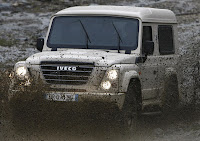
Iveco Campagnola, 2009


  •  Iveco Campagnola, 2009

After more than twenty years the Iveco Campagnola is back. Italy's best loved Fiat vehicle was originally produced in different versions from 1951 to 1987.

The new Iveco Campagnola is part of the Iveco brand and is derived from Massif, the 4x4 off-road vehicle. Iveco is one of the few global manufacturers to offer a complete range of all-wheel-drive vehicles and with Massif the company has entered a completely new sector of professional transport for the first time offering two light off-road vehicles. Iveco Campagnola extends the range with a model specifically for passenger transport, without sacrificing the authentic off-road features behind the success of its ancestor: separate chassis, all-wheel-drive, high mobility and exceptional off-road capability. In addition to offering the qualities of comfort and driveability demanded by a modern off-road vehicle.

THE MODEL IN BRIEF
Heir to the Fiat tradition in this sector, the new Iveco Campagnola is a special numbered version of the Iveco Massif conceived for professional off-road use.

As a people carrier, the Iveco Campagnola uses the original form of the sporty off-road vehicle, reinventing the authentic spirit of the 4x4 with a modern twist. Its appearance, designed by Giugiaro and the Fiat Centro Stile is very endearing and makes it particularly attractive its front reflecting the family style of Iveco vehicles with its charachteristic radiator grille.

Available only with 3 doors and 4 seats, Iveco Campagnola has a wheelbase of 2452mm, is 4248 mm long, 1750mm wide and 2050mm high. It is equipped with the Daily 3 litre Euro 4 HPT 4-cylinder 16-valve turbodiesel range recognized as the best engine in its class. With its Variable Geometry Turbocharger, it delivers 176hp (129.5kw) at 3,200-3,500 rpm and a maximum torque of 400 Nm at 1,250-3000 rpm. It is combined with 6-speed FPT 2840 transmission.

Available in two historical colours, sage green and ivory with echoes of the past, Iveco Campagnola offers equipment and features more often found in ordinary cars than off-road vehicles. The interior has plenty to offer, with electric front windows, leather upholstery even for the steering wheel and transmission controls, climate control, radio/CD player with 4 speakers and optional GPS system. Outside the Iveco Campagnola "Opening Edition" nameplate displays on both sides the vehicle's logo and number indicating a limited production series. The wheel rims and the bodywork are in matching colours while the bumper and mudguards are finished in matt. Iveco Campagnola is equipped with a engageable rear differential lock, ABS, Immobilizer and anti-theft device.

HEIR TO THE FIAT OFF-ROAD TRADITION
With this vehicle Iveco puts an era-defining means of transport back on the road: "the go-anywhere vehicle that doesn't need a road" as an advertising slogan put it in 1951, the year the Fiat Campagnola was launched.

The memory of the legendary light military vehicles used during the second world war still fresh in the memory: the Willys proved themselves an ideal means of support and reconnaissance. Inspired by this formula, the Italian government ran a competition for special-use vehicles. The history of Campagnola, an icon of Fiat off-road vehicles, is linked, in post-war Italy with that of its 'twin' Alfa Romeo. Fiat and Alfa separately designed two analogous models, named in military terms AR 51 (the abbreviation is short for 'Autoveicoli da Ricognizione' and the number a reference to its year of introduction of 1951) both with 1900 cm3 engines. For civilian use, Fiat chose the less aggressive name of Campagnola and its Milanese 'rival' was called Matta (like the joker in a pack of cards). Only the Campagnola met with extraordinary success, while the Alfa 4x4 was produced up to 1955 with only 2059 units produced. The decisive factor in determining the preference for the Fiat model was its price, the Alfa featured much more expensive technology, inaccessible to public bodies.

The Campagnola D, designed by Dante Giacosa and constructed according to the Willys mould, debuted at the Fiera del Levante show in Bari in 1951 at a price of 1,600,000 lire. It had a front mounted engine, 4 driven wheels with disengagable front driven wheels and a transfer box. In November 1951 it crossed Africa from Cape Town to Algiers in 11 days, 4 hours and 54 minutes, overcoming every possible adversity and establishing the world record. The Campagnola, with petrol engine rated at 53hp at 5,300 rpm, 4 speed and reverse transmission, (II, III and IV synchronized), lockable rear differential, central gearshift lever and top speed of 100km/h. with a gradeability of 90% (in first gear) and consumed an average of 12.1 litres per 100km. The body was 3.64m long and 1.48 wide and weighed 1,250kg. The front suspension was independent with wishbones, helical springs, hydraulic dampers and stabilizing bar. In short, the best available at that time. The rear suspension was by leaf springs with a rigid axle and hydraulic dampers. The AR 51 military version was also adopted by the Carabinieri.

1953 saw the appearance of the 40hp 3200 rpm diesel version (still 1.9) offering 85km/h at a price of 1,792,000 lire.

In 1955 came the Campagnola A (AR 55) with more powerful 63hp (116 km/h) petrol engine and 43hp diesel model, in 1960 the Campagnola B with 47hp diesel engine, reaching 95 km/h. The Fiat off-road was able to carry 6 people with more than 60kg of luggage, or one person with 410kg of luggage.

1968 was the turn of the C Diesel: a 1895cc, 47 hp engine developing at 3,800 rpm, 96 km/h. The production of the first Campagnola ceased in 1973, following the production of 39,086 models, of which 7,783 models were diesel.

The summer 1974 saw the debut of the new Campagnola, manufactured until 1979. Much more technically advanced it was also a much more comfortable model: it could transport up to 7 people. It was launched at the Belgrade Show and retained only the name of its predecessor. It was a modern vehicle with engines already proven on the Fiat 132, independent four wheel suspension and automotive bodywork. Optional features included locking differentials on both axles and improved tyres, dual-joint front driveshafts rear seats and a ventilation system. The engine had 4 cylinders inline of 1,995 cm3 swept volume rated at 80hp at 4,600rpm, 4 speed and reverse transmission, (fully synchronized), central gearshift lever and a top speed of 115 km/h. The new Campagnola was 3.77m long and 1.58 wide and weighed 1,570kg when empty. It had a selling prico of 4,076,000 lire. The 'Torpedo Corta' version features roof and sides in removable fabric.

In 1976 the 'Lunga' (with an increased rear of 25cm overhang) and 'Hardtop' (with completely metallic bodywork) versions were introduced.

In autumn 1979 Fiat replaced the engine of the new Campagnola with a new diesel engine more suited for off-road use: the 2-litre SOFIM provided 60hp at 4,200 rpm and guaranteed a top speed of 120km/h. There have been numerous enhancements to its bodywork and interior. The list price ranged from 14,018,000 to 15,198,000 lire according to the version. Production of Campagnola ceased in 1987.

The Campagnola held particular significance for post-war Italy and during the reconstruction of the 1950s. It was a means of transport that defined an era in a country still lacking an adequate road infrastructure and is still alive in the memories of Italians. Used by the Carabinieri, the Italian army and the Civil Defence Corps and also became famous as the Popemobile, the white livery model featuring the Vatican insignia. The one used by Benedict XVI for his first official outing in the crowds of the Piazza San Pietro is the same one that was donated to John Paul II on the occasion of his visit to Turin in 1980 and accompanied the public appearances of Karol Wojtyla who introduced - also thanks to this vehicle - a new way of communicating with people. Also in white, but with the UN logo, the Campagnola has participated on numerous international peace missions throughout the continents,

CAMPAGNOLA TECHNOLOGY
Iveco Campagnola has adopted the Massif off-road cutting-edge technology, with a strong impression that sets it apart from the Sports Utility Vehicle used mainly on metalled roads. A return to the origins of 4x4 that makes compromising between road and off-road vehicles a thing of the past. Like Massif, the new Campagnola is suitable for all terrains, capable of offering specific optimal performance and tackling extreme off-road routes with confidence. The gradeability at full-load is 100%, with an approach angle of 50°, a departure angle of 34° and a ramp angle of 33°. The standard fording depth is 500m, the all-wheel-drive is disengageable - with traction on the rear axle - to ensure considerably reduced fuel consumption.

The transmission
The 6-speed FPT 2840 with overdrive is linked to the transfer case allowing a choice of 4x2 or 4x4 traction. It has 12 forward gears and 2 in reverse. The excellent combination of components takes its inspiration from the Daily range, the transfer box is linked to the front and rear axles via the transmission shafts. This provides a drive ratio of approximately 1:1 and the engagement of all-wheel-drive is selectable when the vehicle is in high range. In low range only all-wheel-drive is available. The parking brake is mounted on the rear axle output flange of the transfer box, resulting in a more powerful braking torque since it is multiplied by the drive axle ratio. This is an extremely important feature because it means that the vehicle can be held by its parking brake in all the impressive gradients it can climb.

Suspension
The separate chassis with axles mounted on parabolic leaf springs is a no-compromise choice: the separate chassis ensures the high structural stresses of off-road use avoid being transmitted to the body structure, preserving longevity. The leaf springs provide axle location and body suspension without the need for extra drive- or braking-force reaction members or axle location links to the vehicle chassis. The parabolic leaf springs serve a double role of suspension of the chassis and axle location. The suspension layout facilitates the reactions to the drive and braking torque without the need for additional links or forks: a definite advantage for off-road vehicles. The front axle is equipped with double-acting hydraulic dampers, the rear axle with double acting gas dampers. The system is completed by front and rear antiroll stabilizing bars. The maximum load of the front and rear axle is respectively 1175kg and 1750kg with the maximum vehicle load of 2650kg.

The braking system
The braking system incorporates a double hydraulic circuit with a vacuum servo-assistance circuit which actuates the disc brakes all round, ventilated on the front axle. The parking brake is a cable-actuated drum brake, mounted on the transfer box for improved braking torque with a multiplication factor matching the drive axle ratio.

State-of-the-art engine
The heart of the Iveco Campagnola is its 3 litre HPT engine originating from the Daily range, a 4-cylinder 16-valve turbocharged diesel engine with technologically advanced common rail fuel injection system offering superb performance and consistent fuel economy. The engine is certified according to Euro 4 emission standards, using Exhaust Gas Recirculation (EGR) to reduce production of nitrogen oxide and an oxidizing catalyst. With its variable geometry turbocharger, the engine delivers 176hp at 3,200-3,500 rpm and a maximum torque of 400 Nm at 1250-3000 rpm. It is a power unit unique in its category,

BRAND VALUES
Iveco Campagnola is designed to reflect the fundamental values of Iveco excellence: determination, reliability, performance and team spirit. These values are shared by the New Zealand rugby squad, the All Blacks, that have won more matches than any other team in history. The same team spirit serves as inspiration for Massif and Campagnola: it means working alongside clients for the entire vehicle's life, starting with the product development phase, through work of specialist engineers and Iveco R&D centres which involve clients from the planning stage and then during the purchase, with the help of professionals ready to offer technical assistance and financial solutions to cater for every necessity. The same high service is offered to clients during vehicle activity, with a call centre open 7 days a week, 24 hours a day, 365 days a year and a efficient and widespread network (more than 4,600 specialist centres in 100 countries).

Iveco - the complete range of all-wheel-drive vehicles
The Iveco Campagnola is one of the Massif passenger-carrying models, forming part of a small but important niche in the market for all-wheel-drive work vehicles. Massif is produced with conjunction with the Spanish manufacturer Santana, whose original vehicle has been completely redesigned by Iveco experts with considerable use of technology and solutions derived from the Daily. The fruit of this profound re-engineering is a vehicle suitable for genuine 'off-road truck' missions. Iveco's authority in the 4x4 sector extends to the entire range of commercial vehicles, from light to heavy models - Daily, Eurocargo and Trakker, not to mention the Iveco Astra range and the advanced technology products developed by the Iveco defence division - providing an appropriate response to all types of mission and all work conditions. These all-wheel-drive vehicles are remarkably sturdy, ideal to transport people and equipment wherever they are needed, often in emergency conditions. The reliability of these vehicles is second to none in extreme as well as normal conditions. The numerous demands of the off-road have no negative impact on driver comfort which remains as enjoyable as it would imagine to be.

Front and rear drive axles
Drive axles are positioned at the front and rear of the vehicle with a final drive ratio of 3,909:1. The final drive gearing used on the front axle is helicoidal while that on the rear axle is a hypoid gear set to provide improved ground clearance for the centrally-mounted differential housing.

Tuesday, June 18, 2013

Hummer H3T Alpha, 2009


  •  Hummer H3T Alpha, 2009

The HUMMER is bringing its unmistakable style and unmatched capability to the truck market with the 2009 H3T. It is based on the architecture of the popular H3, but features a five-passenger crew cab and a separate five-foot-long (1.5 meters) bed.

The Hummer H3T is bigger than a midsize truck and smaller than a full-size truck, creating its own niche in the market. It also is infused with the attributes expected of a HUMMER, including exceptional off-road capability and a premium interior that is as functional as it is comfortable.

The Hummer H3T also stands apart from other trucks with its signature HUMMER off-road capability. It is the only midsize truck to come standard with full-time four-wheel drive, 32-inch tires and functional skid shields. It also is the only midsize truck to offer front and rear locking differentials, as well as 33-inch tires. The V-8-powered H3T Alpha can tow up to 5,900 pounds (2,676 kg).

The Hummer H3T is offered in four trim levels, including five-cylinder models and the popular, V-8-powered H3T Alpha edition. Production is scheduled to begin in the third quarter of 2008 at GM's Shreveport, La., assembly plant, with vehicles arriving at HUMMER dealerships shortly thereafter. HUMMER will sell The Hummer H3T in North America, Europe and the Middle East.

The Design
Like all HUMMER models, The Hummer H3T has a purposeful design. Its consistent and iconic styling cues include a wide, aggressive stance; a low roofline and high beltline; and large, off-road tires. The wide, seven-slot grille and round headlamps mounted in square housings are signature HUMMER design elements.

The crew cab body shares H3 styling and components from the B-pillar forward, while the rear section of the cab and the separate bed are unique to The Hummer H3T. The five-foot bed is similar in design and function to GM's recently redesigned full-size trucks, including an easily removable tailgate and provisions for a bed-rail accessory system. A full-size spare tire is mounted beneath the bed.

The bed is sized to carry a wide range of popular outdoor necessities, from hauling motocross bikes to Baja, a quad to camp, or backcountry gear to the trailhead. One of the industry's largest portfolios of accessories complements The Hummer H3T's bed, offering different cargo management options to suit all of those lifestyle interests.

The Accessories
One of the industry's broadest portfolios of vehicle accessories has been developed for The Hummer H3T. Centered on active lifestyles, items such as removable and lockable bed-mounted storage boxes; an adjustable bike chock that can be used to help secure mountain bikes or motorcycles; and a bed extender make full use of the standard bed-rail cargo management system. A range of additional accessories that improves off-road capabilities, provides passenger entertainment and enhances exterior styling is also available. There are more than 75 HUMMER Genuine Accessories offered.

In addition to the factory-developed accessory portfolio, HUMMER has partnered with top automotive aftermarket companies to develop more than 50 Officially Licensed HUMMER Accessories - a first for the brand. A variety of exterior enhancements, such as a Slant Back Bed Cover, hard tonneau covers and a winch are offered, along with cargo management solutions such as the BedSlide and bed divider, offering countless possibilities to personalize The Hummer H3T.

The Interior
The Hummer H3T's crew cab cabin offers seating for five adults, with a 60/40-split rear bench seat that folds flat for increased cargo-carrying options. The cabin's layout is essentially identical to the acclaimed H3 SUV, with premium materials and attention to detail that give the vehicle a functional yet refined aesthetic.

Standard amenities also include air conditioning, power locks, power windows and remote keyless entry. An AM/FM radio with CD is standard and a premium Monsoon audio system is available. XM Satellite Radio also is standard and includes three months of trial service.

HUMMER's Rear Vision system and a navigation system are available. The Rear Vision system uses a camera mounted on the rear bumper, directly above the trailer hitch mount, to provide a view of objects directly behind the vehicle. Also, the safety and security of OnStar is standard, with Turn-By-Turn Navigation and hands-free Bluetooth connectivity available.

Powertrain
Standard in The Hummer H3T is the Vortec 3.7L I-5 with dual overhead cams and variable valve timing. This inline five-cylinder engine offers an excellent combination of power and efficiency, delivering 242 horsepower (180 kW) at 5600 rpm* and 242 lb.-ft. of torque (328 Nm) at 4600 rpm. It is backed by a five-speed manual transmission or an available four-speed, electronically controlled automatic.

The Hummer H3T Alpha's 5.3L engine is a powerful and efficient member of GM's legendary small-block V-8 family. It is rated at 300 horsepower (224 kW)* and 320 lb.-ft. of torque (434 Nm).* An aluminum cylinder block is used with the H3 Alpha's engine. It helps reduce overall mass and maintains a more desirable front-to-rear weight balance.

A Hydra-Matic 4L60 electronically controlled four-speed automatic transmission is paired with the 5.3L engine. Flat towing is enabled on all H3 and H3T models.

Chassis
The Hummer H3T's frame and suspension system are based on a stretched version of the H3 SUV's chassis and suspension - the same race-proven design found on Baja 1000-winning stock-class race trucks. The wheelbase measures 134.2 inches (3,409 mm) - 22 inches (86 mm) longer than the H3 SUV.

A ladder-type frame is the truck's foundation and it has a modular, three-piece design that incorporates fully boxed components for outstanding strength and stiffness. An independent SLA torsion bar front suspension and multileaf Hotchkiss-type rear suspension are used. There are two suspension packages:
  • Z85 Heavy-Duty Handling and Trailering - This standard suspension delivers an excellent balance of on-highway comfort and off-road capability. It includes 32-inch all-terrain tires mounted on 16-inch, smoke-color steel wheels, specially tuned heavy-duty shocks and either a 4.56-ratio (3.7L) or 4.10-ratio (5.3L) rear axle.
  • Off-Road Adventure - Designed for more aggressive off-road performance, this optional suspension package includes taller, 33-inch tires, specifically tuned shocks, locking front and rear differentials, 4.03:1 low-range gearing in the transfer case and industry-leading crawl ratios of either 68.9 with the manual transmission or 56.2 with the automatic.

To support the torque output of the 5.3L V-8, The Hummer H3T Alpha's front differential case is made of cast iron; other models feature an aluminum case. V-8-powered vehicles also receive higher torsion bar rates to support the increased mass and specific shock valving. The chassis and suspensions were validated in real-world testing on off-road trails in Moab, Utah; the Rubicon Trail in California, and other challenging off-road venues.

Off-road capability
The Hummer H3T lives up to HUMMER's legendary off-road reputation, with best-in-class extreme off-road capability. Highlights:
    Ability to climb a 60-percent grade and traverse a 40-percent side slope
    Exceptional 10.2-inch (285 mm) ground clearance (with 33-inch tires)
    38.7-degree approach angle and 30.1-degree departure angle (with 33-inch tires)
    Segment-first available front- and rear-locking differentials
    Standard HUMMER Hill Hold Assist for improved hill ascension

Complementing the features that enable The Hummer H3T's impressive off-road prowess are a host of first-class protective elements, including four standard skid shields: a front shield, an oil-pan shield/front-axle shield, a transfer case shield and a fuel tank shield.

Safety
Continuing HUMMER's tradition of delivering a broad range of safety systems, The Hummer H3T offers the following standard features:
    Dual frontal air bags with GM's passenger sensing system
    Head curtain side-impact air bags
    StabiliTrak electronic vehicle stability control system
    Four-wheel ABS with traction control
    Tire pressure monitoring system
    LATCH rear child seat anchors
    OnStar with one-year Safe & Sound service

The Hummer H3T was also designed for vehicle-to-vehicle compatibility in the event of a crash, and its rigid body structure provides good passenger protection.

Tuesday, May 14, 2013

Rinspeed E2, 2009


  •  Rinspeed E2, 2009

What is Rinspeed E2? It is round, small and cuddly, has eyes to fall in love with, a sexy behind - and on demand 60 or 160 hp as necessary. It is Rinspeed's answer to the fast changing requirements of the market and sociopolitical perception about the tuning industry.' Rinspeed boss Frank M. Rinderknecht hits the nail on the head: "Just like the auto industry has to adjust to the demands of a new era, tuners have to look for new ways to do business as well." The Swiss automobile visionary Rinderknecht, who has his roots in the tuning business, observes a change in people's attitude, at least in the western world: 

Rinspeed's creation is based on the Abarth version of the Fiat 500. Its name 'E2' signals the fact that the nimble little Italian car is equipped with two different power levels: The 60-hp 'Commuting' level is more than sufficient to move along with city traffic while saving energy. In this mode the Rinspeed E2 consumes just some four liters of fuel per 100 kilometers. Outside the city, the 'Highway' mode provides driving fun and added power for fast and safe passing. In 'Highway' mode the engine produces 160 lively horsepower and transforms the Italian flea into a venerable hornet. Fuel consumption in 'Highway' mode is in the neighborhood of seven liters per 100 kilometers. The energy management system of the Rinspeed E2 is controlled by a small button in the cockpit that affects the engine electronics.

Rinderknecht believes he is on the right path with his new interpretation of automobile customizing. With the Rinspeed E2 and his Rinspeed iChange Concept, which is much further removed from production, he wants to nudge the automotive as well as the tuning industries in a new direction, to leave well trodden paths and creatively look for new ones:

Saturday, May 11, 2013

Pontiac G3, 2009


  •  Pontiac G3, 2009

Expanding its portfolio in the rapidly growing small car segment, Pontiac announced plans to bring the sporty, five-door hatchback Pontiac G3 to U.S. showrooms early next year. When it arrives, the G3 provide Pontiac with a total of four vehicles capable of more than 30 miles per gallon on the highway.

Successful in Canada (as the Pontiac G3 Wave) and Mexico (as a sedan model), the Pontiac G3 offers an EPA estimated 27 mpg in the city and 34 mpg on the highway while providing the best shoulder and hip room in the segment for seating five adults.

The 2009 Pontiac G3 join the all-new 2009 Pontiac Vibe (32 mpg) and recently enhanced 2009 versions of the G6 sedan (33 mpg) and G5 coupe (37 mpg) in Pontiac's "Over 30" club.

Generating 106 horsepower (79 kW), the Pontiac G3's 1.6L Ecotec four-cylinder engine is mated to a five-speed manual or optional four-speed automatic transmission. It will also feature an unusually rich mix of standard features for an entry-level car, including air conditioning, a CD/MP3 audio system with auxiliary input jack, fog lamps, rear spoiler, OnStar, and a host of standard safety features, including four airbags, that gain the Pontiac G3 a five-star frontal crash rating.

Interior space is optimized to comfortably seat five adults, including "theater"-style seating for rear seat passengers. The rear seats also feature a 60/40 split to offer up to 42 cubic feet of cargo space.

Monday, December 24, 2012

Chevrolet Corvette GT1, 2009


  • Chevrolet Corvette GT1, 2009

The Chevrolet introduced the limited production Corvette GT1 Championship Edition.
Championship Edition (Regular Production Option GT1) commemorates the success of Corvette Racing and the Corvette C6.R:
    * Eight American Le Mans Series GT1 manufacturers and team championships
    * Five-time 24 Hours of Le Mans class champions
    * 74 victories in international sports car competition

GT1 Championship Edition package:
    * Graphics inspired by C6.R livery feature Corvette Racing
    * ZR1-style body color full-width spoiler and chrome wheels
    * Custom leather-wrapped ebony interior with exclusive yellow accent stitching
    * GT1 embroidery on leather seats, instrument panel, and center console armrest
    * Special engine cover with carbon pattern and yellow Corvette lettering
    * Windshield banner (owner installed)


Monday, December 17, 2012

Audi e-tron Concept, 2009


  •  Audi e-tron Concept, 2009

Audi presents the highlight of the IAA 2009: the Audi e-tron Concept, a high-performance sports car with a purely electric drive system. Four motors - two each at the front and rear axles - drive the wheels, making the concept car a true quattro. Producing 230 kW (313 hp) and 4,500 Nm (3,319.03 lb-ft) of torque, the two-seater accelerates from 0 to 100 km/h (0 - 62.14 mph) in 4.8 seconds, and from 60 to 120 km/h (37.28 - 74.56 mph) in 4.1 seconds. The lithium-ion battery provides a truly useable energy content of 42.4 kilowatt hours to enable a range of approximately 248 kilometers.

The performance figures are by no means the only evidence of the consistent and holistic strategy. The design makes it clear that the Audi e-tron Concept belongs in the major leagues of sports cars, and the package takes into account the specific realities of an electric vehicle. The battery is directly behind the passenger cabin for an optimal center of gravity and axle load distribution.

The Audi e-tron Concept is able to freely distribute the powerful torque of its four electric motors to the wheels as required. This so-called torque vectoring allows for dazzling dynamics and an undreamed-of level of agility and precision when cornering.

Audi has taken a new and in some cases revolutionary approach to many of the technical modules. A heat pump is used to efficiently warm up and heat the interior. The drive system, the power electronics and the battery are controlled by an innovative thermal management system that is a crucial component for achieving the car's range without compromising its high level of interior comfort. Networking the vehicle electronics with the surroundings, which is referred to as car-to-x communication, opens new dimensions for the optimization of efficiency, safety and convenience.

The Concept
Electric drive systems are still very much outsiders. The first vehicles of this type took to the roads around 1900, yet in 2009 no volume car manufacturer has a car powered exclusively by batteries in its lineup. Fewer than 1,500 electric vehicles are currently registered in Germany, corresponding to only 0.035 percent of all registered vehicles.

Yet electric driving potentially offers numerous advantages. Electric cars reduce the dependence of transportation and the economy on the raw material petroleum. They produce no direct exhaust emissions and thus ease the local burden on the environment. Electric drive systems are also significantly more efficient than combustion engines, consequently making them easier on the customers' wallets. Other strengths include sportiness and the fun they bring to driving. All of the torque is essentially available the moment the driver steps on the accelerator, allowing for breathtaking acceleration.

There is still a lot of work to do before electric cars are ready for volume production, however. The greatest challenge is the integration of the energy storage system. Acceptable range and performance requires a traction battery that is heavy and takes up a lot of space. Audi is taking a new approach to offset these disadvantages - a holistic approach with a specific vehicle package, a systematic lightweight construction concept and an optimal configuration of all components for the electric drive.

Audi e-tron Concept - The Holistic Approach
The most important development related to batteries for electric drives are lithium-ion cells. Numerous experts throughout the world are working on their further development for use in cars, with the primary objectives being to reduce weight and increase capacity and performance. Audi has also opted for this technology, both for use in a hybrid production vehicle, such as the upcoming Q5 hybrid, and in the e-tron test platform.

The requirement specification for the concept vehicle goes far beyond battery technology and the replacement of the combustion engine with an electric drive system, however. The Audi development engineers decided back in the concept phase to design practically every component and technology based on the new requirements of electric mobility. The interaction of all elements has a decisive influence on the factors efficiency, range and practicality.

The Audi team therefore focused its attention on the total vehicle, which is reflected in the comprehensive requirement specification:
  •  The reduction of road resistances and the resulting increase in range plays a major role with electric vehicles. Lightweight construction was therefore a top priority for the Audi e-tron Concept car. The body, in particular, combines low weight with supreme strength and rigidity. An intelligent aerodynamics concept with active elements helps to reduce consumption.
  •  The package ensures the safe integration of the electric drive system and the battery. Placing the battery in front of the rear axle ensures an optimal axle load distribution without compromising the compact overall design and the generous amount of interior space.
  •  Advanced battery technology enables a practical range. The battery system is water-cooled for optimal performance and service life.
  •  A needs-based energy management system controls all functions for the chassis, convenience equipment and other auxiliary consumers.
  •  The innovative thermal management system with optimally matched cooling and heating components considers the cooling requirements of the battery and the drive system in addition to the interior temperature.
  •  Driving dynamics and road comfort are what Audi customers have come to expect in the sports car segment.
  •  Vehicle safety is on par with the best of today's production vehicles.
  •  The driver is provided with clear and comprehensive information.
  •  The Audi e-tron Concept car uses car-to-x communication technology developed by Audi to improve the efficiency of conventionally powered vehicles. For example, information about traffic light cycle times and the flow of traffic - provided by the infrastructure and other vehicles - is used to compute an optimal driving strategy. Audi has already modeled such a solution in Ingolstadt as part of its "travolution" project.

Design and Package

The caliber of the car is apparent to the observer at first glance. The Audi e-tron Concept has a wide, powerful stance on the road. The car body seems almost monolithic; the closed rear end appears powerful and muscular. The trapeze of the single-frame grille dominates the front end and is flanked by two large air intakes. The top of the grille merges into the flat strips of the adaptive matrix beam headlamp modules with their clear glass covers. High-efficiency LED technology is used for all lighting units - a matter of honor for Audi as the worldwide pioneer in this field.

The headlamps are the core of a fully automatic light assistance system that reacts flexibly to any situation. The new technology recognizes weather conditions and adapts the illumination to rain or fog. The technology at the heart of the light assistance system is a camera that works together with a fast computer to detect oncoming traffic, recognize lanes and measure visibilities, such as in the event of fog.

If there is oncoming traffic, for example, the high beams are turned off in the corresponding section of the illumination field. The cornering light system analyzes data from the navigation system and illuminates corners before the driver steers into them. The Audi e-tron Concept does not have conventional fog lamps that consume additional power. It instead intelligently varies the low beams to widen the illumination field, thus significantly reducing the glare from the car's own lights.

The variability of the headlamps is also reflected in their design. The LED elements change appearance and thus the character of the front end of the vehicle depending on the speed driven and the ambient conditions. The innovative lighting technology offers the Audi designers almost as much design freedom as the shape of the body does.

A new design element unique to the Audi e-tron Concept are the air intakes in the single-frame grille and in front of the rear wheel wells. They are closed flush under normal circumstances and opened by means of flaps when additional cooling air is required. Maximum efficiency is also the reason behind this measure. The concept car has a remarkably low drag coefficient, which gets even better when the flaps are closed.

The vehicle body is compact. The sweeping line of the front end and the flat curved roof immediately identify the two-seater as an Audi. The contours of the flanks are familiar. The tapering of the dynamic line above the sill and the shoulder line tie together the front end, the side and the rear, lend a plastic quality to the doors and the transition to the side air intake and sharply emphasize the Audi-typical round wheel wells with the large, 19-inch tires.

1.90 meters (74.80 in) wide, just 4.26 meters (167.72 in) long and 1.23 meters (48.43 in) tall - those are the proportions of a supercar. The wheelbase of 2.60 meters (102.36 in) leaves plenty of room between the axles for people and technology. Like with a mid-engined sports car, the cabin of the Audi e-tron Concept is shifted far forward toward the front axle, leaving room in front of the rear axle for the roughly 470 kilogram (1036.17 lb) battery unit, the inverter and the power electronics.

The two electric motors, which have their own cooling system, are mounted behind the rear axle. The front electric motors are mounted on the front axle, with their cooling system arranged in front of them. This special package, which features a 42:58 weight distribution, ensures perfect balance, which contributes to the driving dynamics of the Audi e-tron Concept.

Systematic lightweight construction is an even more important prerequisite for efficiency and range with electric vehicles than for conventionally powered automobiles. The Audi development engineers drew on the core competence of the company for the Audi e-tron Concept. The body structure is based on Audi Space Frame (ASF) technology and was realized as a hybrid construction. All add-on parts - doors, covers, sidewalls and roof - are made of a fiber-reinforced plastic.

The combination of aluminum and carbon fiber-reinforced composite material guarantees supreme rigidity coupled with low weight. Audi will soon use this technology in a similar form for production vehicles. Despite the complex drive system layout with four electric motors and a high-capacity battery system, the total weight of the Audi e-tron Concept is only around 1,600 kilograms (3527.40 lb).

Interior and Control Concept
Optical and functional references to the new drive concept characterize the interior design. They establish an advanced connection between proven Audi genes and new formal hallmarks. Typical for the Audi design language is the reduction of the architecture, controls and flow of information to the essential in favor of visible lightweight construction and a tidy overall impression.

The dash appears to float and has a curve that extends laterally into the door panels. With no need to allow for a transmission, shifter and cardan tunnel, the designers took advantage of the opportunity to create a particularly slim and lightweight center tunnel and center console. The flush gear selector, with which the driver chooses between the modes forward, reverse and neutral, emerges from the tunnel when the vehicle is started.

The cockpit of the Audi e-tron Concept is also oriented toward the driver - a further characteristic Audi trait. Instead of the classic instrument cluster, the concept car is the first Audi to be equipped with a large, fold-out central display with integrated MMI functions. It is flanked by two round dials.

The MMI is controlled via a scroll pad with a touch-sensitive surface on the steering wheel ("MMI touch") - an element inspired by modern smartphones.

While an analog speedometer on the right provides speed information, the instrument on the left tells the driver how much power is being drawn. The central display shows the range in the status bar and presents all key information from the infotainment and navigation systems. It also provides the driver with relevant data from the vehicle's communication with its surroundings. The instruments combine the analog and the digital worlds into a single unit.

Characteristic for the concept of the Audi e-tron Concept is the near total elimination of switches and small components such as the ignition. The climate control unit is located to the right above the steering wheel. The display provides temperature and ventilation information. Again drawing inspiration from a smartphone, the system is controlled by means of a touch-sensitive sliding control.

The racing-inspired lightweight bucket seats combine excellent lateral support with comfort. To contrasting colors - snow white and cognac - delineate the various zones of the interior. The colors and the high-quality materials combine elegance and sportiness.

Drive System and Energy Supply
Four asynchronous motors with a total output of 230 kilowatts (313 hp) give the Audi e-tron Concept the performance of a high-output sports car. The concept car can accelerate from 0 to 100 km/h (0 - 62.14 mph) in 4.8 seconds if necessary, and goes from 60 to 120 km/h (37.28 - 74.56 mph) in 4.1 seconds. The torque flows selectively to the wheels based on the driving situation and the condition of the road surface, resulting in outstanding traction and handling.

The top speed is limited to 200 km/h (124.27 mph), as the amount of energy required by the electric motors increases disproportionately to speed. The range in the NECD combined cycle is approximately 248 kilometers (154 miles). This good value is made possible by the integrated concept: technology specially configured for the electric drive system combined with state-of-the-art battery technology. The battery block has a total energy content of roughly 53 kilowatt hours, with the usable portion thereof restricted to 42.4 kWh in the interest of service life. Audi uses liquid cooling for the batteries.

The energy storage unit is charged with household current (230 volts, 16 amperes) via a cable and a plug. The socket is behind a cover at the back of the car. With the battery fully discharged, the charging time is between 6 and 8 hours. A high voltage (400 volts, 63 amperes) reduces this to just around 2.5 hours. The Audi engineers are working on a wireless solution to make charging more convenient. The inductive charging station, which can be placed in the garage at home or also in special parking garages, is activated automatically when the vehicle is docked. Such technology is already used today in a similar form to charge electric toothbrushes.

The battery is charged not only when the car is stationary, but also when it is in motion. The keyword here is recuperation. This form of energy recovery and return to the battery is already available today in a number of Audi production models. During braking, the alternator converts the kinetic energy into electrical energy, which it then feeds into the onboard electrical system.

The Audi e-tron Concept, which is slowed by four lightweight ceramic brake discs, takes the next large step into the future. An electronic brake system makes it possible to tap into the recuperation potential of the electric motors. A hydraulic fixed-caliper brake is mounted on the front axle, with two novel electrically-actuated floating-caliper brakes mounted on the rear axle. These floating calipers are actuated not by any mechanical or hydraulic transfer elements, but rather by wire ("brake by wire"). In addition, this eliminates frictional losses due to residual slip when the brakes are not being applied.

This decoupling of the brake pedal enables the Audi e-tron Concept's electric motors to convert all of the braking energy into electricity and recover it. The electromechanical brake system is only activated if greater deceleration is required. These control actions are unnoticeable to the driver, who feels only a predictable and constant pedal feel as with a hydraulic brake system.

Making its Automotive Debut: The Heat Pump
The heat pump - used here for the first time ever in an automobile - also serves to increase efficiency and range. Unlike a combustion engine, the electric drive system may not produce enough waste heat under all operating conditions to effectively heat the interior. Other electric vehicles are equipped with electric supplemental heaters, which consume a relatively large amount of energy. The heat pump used by Audi - and commonly used in buildings - is a highly efficient machine that uses mechanical work to provide heat with a minimum input of energy.

A high-efficiency climate control system is used to cool the interior. It works together with the thermal management system to also control the temperature of the high-voltage battery. The battery, the power electronics and the electric motors must be kept at their respective ideal operating temperatures to achieve optimal performance and range.

As soon as the vehicle is connected to a charging station the vehicle is preconditioned as appropriate by the thermal management and other associated systems.

The drive system is heated if temperatures are cool, and cooled if hot. This preconditioning can also be extended to the interior, if necessary, so that the passengers can step into a cabin that has been heated or cooled as appropriate for their comfort.

Driving Dynamics
The normal distribution of the tractive power is clearly biased toward the rear axle in accordance with the weight distribution of the Audi e-tron Concept. Similarly to a mid-engined sports car, roughly 70 percent of the power goes the rear and 30 percent to the front. If an axle slips, this balance can be varied by means of the four centrally controlled electric motors. The electric vehicle from Audi thus enjoys all of the advantages of quattro technology.

The four individual motors, which in the interest of greater traction are installed behind the wheels as wheel drives, also enable the Audi e-tron Concept's lateral dynamics to be intelligently controlled. Similar to what the sport differential does in conventional quattro vehicles, torque vectoring - the targeted acceleration of individual wheels - makes the Audi e-tron Concept even more dynamic while simultaneously enhancing driving safety. Understeer and oversteer can be corrected by not only targeted activation of the brakes, but also by precise increases in power lasting just a few milliseconds. The concept car remains extremely neutral even under great lateral acceleration and hustles through corners as if on the proverbial rails.

The chassis has triangular double wishbones at the front axle and trapezoidal wishbones made of forged aluminum components at the rear axle - a geometry that has proven in motorsports to be the optimal prerequisite for high agility, uncompromising precision and precisely defined self-steering behavior. A taut setup was chosen for the springs and shock absorbers, but it is still very comfortable.

The direct rack-and-pinion steering gives finely differentiated feedback. Its electromechanical steering boost varies with speed, so that the Audi e-tron Concept only has to provide energy while steering, and not while driving straight ahead.

As befitting its status, the Audi concept car rolls on 19-inch tires with a new blade design. 235/35 tires up front and 295/30 tires in the rear provide the necessary grip.

Car-to-x Communication
The electronics development engineers at Audi not only aimed to make the Audi e-tron Concept as efficient and fun to drive as possible, they were also very concerned with safety and traffic management. The technical concept car includes a prototype of an information processing system. Future generations of these systems will usher in a new era in the networking of road traffic, particularly in regions and countries with a high volume of traffic. This progress is made possible by the rapid advancements in computing power, software and communication technology.

The buzzword "car-to-x communication" refers to the direct exchange of information in flowing traffic and to the traffic environment. The letter "x" is a free variable that can refer just as easily to other vehicles as to fixed infrastructure such as traffic lights. In contrast to today's telematic systems, car-to-x communication no longer requires a central service provider to quickly and effectively pool and process information. The participants themselves perform these tasks by spontaneously networking with one another.

The future car-to-x network still needs some time before it becomes reality on the roads. This obstacle is one that can be overcome, however, as nearly every carmaker in Europe, the U.S.A. and Japan has decided to develop a common standard for hardware and software. Once all new cars are equipped with this technology, a functional network of automotive transmitters will soon be available, at least in large population centers.

These transmitters can be used to open up many new practical applications. Below are just four examples showing the possibilities offered by car-to-x communication.

Example 1 - Efficiency and range: Numerous external factors influence energy consumption and thus the range of any vehicle. An intelligent vehicle equipped with car-to-x technology is aware of necessary braking or acceleration maneuvers in advance because it combines navigational data with information about the flow of traffic, for example. The central computer can prevent driver actions that would use energy unnecessarily or use targeted braking for recuperation of the battery.

Example 2 - Safety: A vehicle has spun out on a slippery road in a blind curve and is unable to free itself under its own power. At the same time, other vehicles are approaching quickly. The stuck vehicle uses car-to-x to send out a warning signal reporting the precise location of the hazardous location. A corresponding warning then appears on the navigation system display of the approaching cars.

Example 3 - Traffic flow: Many cars are traveling between traffic lights on an arterial road. Over and over again, they accelerate only to have to brake again when the traffic light changes to red. Car-to-x technology enables them to establish a network between themselves and receive information from the traffic light controller. The drivers can then make more judicious use of the gas pedal because they know what to expect. The same applies for imminent traffic jams: cars ahead provide information that results in adjustments to the posted speed limits, noticeably spreading out the traffic.

Example 4 - Convenience: The driver has entered a shopping center with a chronic shortage of parking spaces into his navigation system as the destination. With car-to-x, the mobile system networks with the parking space registration system at the destination. When the system in the parking garage reports that a convenient parking spot is available, the navigation system can register its location and also reserve the spot.

Tuesday, November 27, 2012

Ferrari 599 GTB Fiorano China, 2009


  •  Ferrari 599 GTB Fiorano China, 2009

Ferrari announces the creation of a unique one-off Ferrari 599 GTB Fiorano China Limited Edition, signed by Chinese artist Lu Hao, which will be auctioned on the 3rd of November, 2009 at a special Gala Auction Event hosted by Ferrari in Beijing. This exclusive car follows the announcement in September of a small series of specially-designed Ferrari 599 GTB Fiorano China Limited Edition models which won wide acclaim.

The one-off incorporates a number of the features of the China Limited Edition cars, a very limited series of less than a dozen cars finished in two-tone Rosso Fuoco with silver roof and characterized by unique Chinese design elements.

This one-off model represents an even more exclusive version, thanks to a very special exterior finish which draws inspiration from Ge Kiln porcelain of the Song Dynasty. Lu Hao has blended traditional design elements with Ferrari's innovative styling to create a truly unique vehicle using a 'cracked' glaze pattern which is elegantly coloured, with clearly defined cracks etched at different depths.

Only a few hundred pieces of Ge Kiln porcelain exist today, all of which are priceless treasures. The "cracked" glaze pattern has the lustre of jade and is often used to symbolize the qualities of a true gentleman. Porcelain is one of China's most distinctive ancient arts which was brought to the West via the Silk Road thousands of years ago. Using Ge Kin porcelain as the inspiration for the one-off version is a perfect complement to Ferrari's China Limited Edition Model.

As one of China's most successful and influential contemporary artists, Lu Hao has exhibited his work in major museums and galleries around the world. For this project he drew inspiration from China's rich cultural heritage, and as a Ferrari owner, he has a particularly intimate connection with the brand.

The proceeds generated from the sale of this car will be used on an educational sponsor programme aimed to help young Chinese students in the automotive engineering field. Details of this programme will be released during the auction.

This is just the latest example of charitable events organized by Ferrari in China since Ferrari Maserati Cars International Trading - Shanghai Co. Ltd was set up in 2004. Other fund-raising efforts have seen Ferrari donate over €500,000 to local charities.
Related Posts Plugin for WordPress, Blogger...