Showing posts with label Volvo. Show all posts

Monday, May 27, 2013

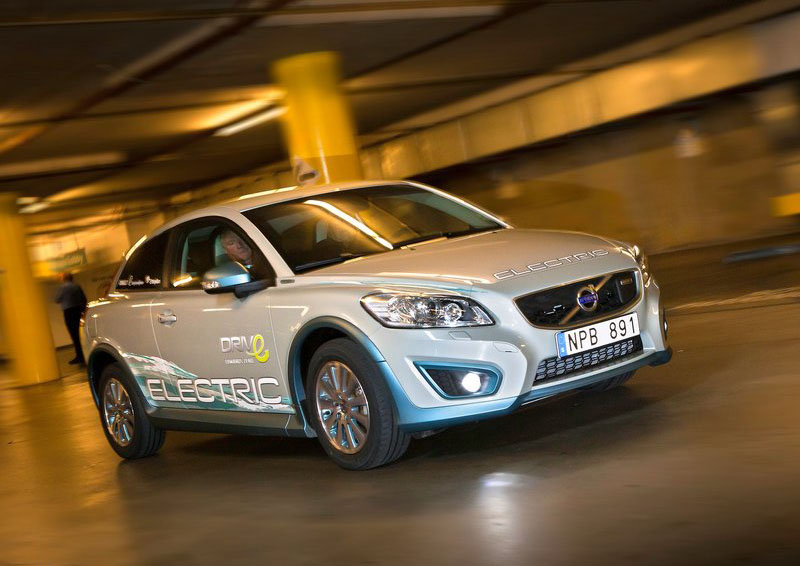
Volvo C30 BEV, 2011


  •  Volvo C30 BEV, 2011

Volvo presented a driveable electric car prototype in September 2009. The Volvo C30 BEV (Battery Electric Vehicle) now being shown at the 2010 North American International Auto Show in Detroit takes the company one step further in the development process. It features both a complete interior and full instrumentation, as well as enhanced battery packaging.

The next step in 2010 is a factory-built series of test cars. Selected users will drive the test fleet during a two-year trial period in order to provide Volvo Cars with valuable experience. Not just technical but also behavioural.

The Swedish Energy Agency is supporting the project by contributing SEK 150 million towards its funding.

Valuable field data
A pure electric car has different characteristics compared to a car with an internal combustion engine. Now Volvo's experts will have the opportunity to study how users handle these differences.

New instruments and graphics
The electric C30 looks like a regular Volvo C30 and it offers the very same safety, comfort and roominess as the standard car. The most obvious difference inside the car is the new instruments facing the driver. The gauges and graphics are somewhat different to those in a conventional Volvo. The cool and user-friendly combined instrument shows in principle only road speed and energy consumption. However, it also integrates a number of new symbols such as a gauge for battery charge status and other relevant information for this type of vehicle.

The driving experience is also different to that in a conventional car. The electric Volvo C30 BEV has no gears and the motor's power is delivered seamlessly, with full power available immediately. "Sailing along virtually without a sound is a very special experience. The power is there instantaneously. We need to spend a lot of time verifying a transmission system that is both comfortable and safe for the driver to handle and at the same time utilizes the battery's capacity optimally at different speeds," says Lennart Stegland.

Like a regular Volvo C30 - all the fun but with no emissions
An electric motor uses about one-fourth as much energy as an engine running on fossil fuels. This superior energy efficiency suggests that interest in electric cars will increase as fuel prices rise and demands for low CO2 emissions become increasingly stringent.

The Volvo C30 shown in Detroit is powered by Lithium-Ion batteries that can be recharged via either a regular household power socket or special roadside charging stations. Charging the battery fully takes about eight hours. If the car is recharged with renewable electricity, CO2 emissions could be almost zero in the well-to-wheel perspective.

Top speed with a fully charged battery pack is about 130 km/h (81 mph). Acceleration from 0 to 60 mph takes less than 11 seconds. The car's range is up to 150 km (94 miles). This covers the daily transport needs of more than 90 percent of all motorists in Europe.

As safe as all other Volvos
The electric motor is fitted under the bonnet while the batteries (24 kWh) are installed in the propshaft tunnel and in the space normally occupied by the fuel tank, outside the passenger compartment and away from the deformations zones.

Market prospects for electric power
When it comes to electric-only cars, there are several factors that determine their appeal in the future. "The consumers must feel that this type of car is attractive both to drive and own. That is why electric cars have to be as comfortable and safe and offer the same sort of performance as cars with other power sources," says Paul Gustavsson, Director of Electrification Strategy at Volvo Cars, "We believe in this technology and our field test aims to demonstrate that electric cars have considerable market potential. However, offering an attractive car is not enough. What is also needed initially is a system of subsidies to make the electric car's expensive battery technology financially viable for the car buyers. We hope that the authorities and the rest of the society will follow Volvo Cars in our "Drive Towards Zero" - Volvo Cars' journey towards zero emissions."

Technical specification
  •     Car model: Volvo C30 - full four seater
  •     Main engine: Electric engine 40/82KW
  •     Power output: Electric engine 82kW, 111 bhp
  •     Acceleration 0-100 km/h: 10.5 seconds
  •     Charging duration: Charging via standard power socket, 230 V, 16 ampere: < 8 hours
  •     Range on electric power: 150 km (NEDC cycle)
  •     Battery energy content: 24 kWh nominal energy, of which 22.7 kWh used to power the car
  •     Battery weight: 280 kg
  •     Carbon dioxide emissions (tailpipe): none

Monday, February 7, 2011

Volvo S60 T5, 2000

Volvo S60 T5, 2000

 
Volvo S60 is a entry-level luxury car / compact executive car built by Volvo that was first introduced in 2000. It uses the Volvo P2 platform, which is shared with the Volvo V70, Volvo S80 and Volvo XC90. It was one of the first "curvy Volvos" designed by Peter Horbury and appropriately used the tagline "Revolvolution" in its advertising campaign. The model was refreshed in 2004.

Engines
    * 2.0, 140hp/103kW, 220Nm, petrol
    * 2.4i, 170hp/125kW, 225Nm, petrol
    * 2.4T, 197hp/146kW, 285Nm, petrol, turbo (replaced by 2.5T)
    * 2.5T 210hp/154kW, 320Nm, petrol, turbo
    * T5, 260hp/191kW, 350Nm, petrol, turbo
    * R, 300hp/220kW, 400Nm, petrol, turbo
    * D, 126hp/93kW, 300Nm, diesel, turbo
    * 2.4D, 163hp/120kW, 340Nm, diesel, turbo
    * D5, 185hp/136kW, 400Nm, diesel, turbo
    * Bi-Fuel, 140hp/103kW, 192Nm, CNG/petrol

Volvo S60, 2000

Volvo S60, 2000


Volvo S60 is a entry-level luxury car / compact executive car built by Volvo that was first introduced in 2000. It uses the Volvo P2 platform, which is shared with the Volvo V70, Volvo S80 and Volvo XC90. It was one of the first "curvy Volvos" designed by Peter Horbury and appropriately used the tagline "Revolvolution" in its advertising campaign. The model was refreshed in 2004.

Engines
    * 2.0, 140hp/103kW, 220Nm, petrol
    * 2.4i, 170hp/125kW, 225Nm, petrol
    * 2.4T, 197hp/146kW, 285Nm, petrol, turbo (replaced by 2.5T)
    * 2.5T 210hp/154kW, 320Nm, petrol, turbo
    * T5, 260hp/191kW, 350Nm, petrol, turbo
    * R, 300hp/220kW, 400Nm, petrol, turbo
    * D, 126hp/93kW, 300Nm, diesel, turbo
    * 2.4D, 163hp/120kW, 340Nm, diesel, turbo
    * D5, 185hp/136kW, 400Nm, diesel, turbo
    * Bi-Fuel, 140hp/103kW, 192Nm, CNG/petrol

Monday, January 31, 2011

Saturday, December 4, 2010

Volvo 780, 1987

Volvo 780, 1987


In March 1985, Volvo Car Corporation showed the result of yet another cooperation in the field of luxury between Sweden and Italy, the Volvo 780, designed and built by Bertone in Turin. The event took place on the Volvo Cars stand at the 1985 Geneva Motor Show.

Exclusive Volvo coupes made in smaller series as top models have been around since the early 1960s. Volvo realised early the importance of expanding into new market segments with the help of such cars, hereby making more customers interested in the less exclusive models.

That worked with the 1800 series which stayed in production for almost thirteen years - with close to 48,000 cars sold, and it was also the case with the top model of the 240/260 series, the 262C.

The 262C was designed and built in Italy by Carrozzeria Bertone and came to the market in 1977. When the next generation of Volvo cars, the 760/740 were launched in the beginning of the 1980s, it did not take long before Volvo repeated the strategy; two saloon/estates were followed by a very exclusive coupe.

Totally new model
If the 262 was just a light modification of the existing body, the Volvo 780 was a totally new model that did not share any body panels with the four or five door cars. Again Bertone was the master behind the design and they were also responsible for the manufacturing, in the Turin factory. The car was launched at the Geneva Motor Show in March 1985.

Comfort was also the best word to describe the model. It was not a sporty car but very comfortable, luxuriously appointed and loaded with all sorts of equipment and accessories as standard features.

Twice the price of a 760 GLE

Most things were electrically operated: Seats, windows, mirrors, sun roof. There was an air conditioning unit, ABS brakes, self-leveling system, a trip computer and state-of-the-art audio equipment. Certainly it was expensive with a price tag of SEK 290,000 or about twice the price of a 760 GLE.

There were three engines to choose from: the 2.8 litre V6, a turbocharged four or the straight-six turbo diesel that Volvo used at the time. None of these engines, however, were capable of giving the car a top speed of 200 kph (125 mph) which is a psychological threshold on the German Autobahn, but it was exclusive, comfortable and quiet. It was primarily aimed at the USA, Japan and a few markets in Europe, one of them was Sweden.

The Volvo 780 stayed in production until 1990 without any major changes to the exterior but technically it kept up with the 760 and got independent rear suspension for model year 1988. It eventually also received the cult status exclusive cars usually get. Only 8,518 780s were made and today it is a collector's item, cared for by owners in both Europe and the USA.

Saturday, November 20, 2010

Volvo PV36 Carioca, 1935

Volvo PV36 Carioca, 1935

 <Click Thumbnails to enlarge>


In 2010 the Volvo PV36 celebrates its 75th anniversary - and let us right from the beginning state: It is not a copy of the Chrysler Airflow which it has been accused of.

The history of these cars is yet another version of the eternal question about whichever was first, the chicken or the egg. What is the truth? Yes, Chrysler was first to put its Airflow on the market in 1934, but that does not automatically mean that Volvo copied its styling. That could not have worked from a timing point of view since the Volvo made its debut less than a year later. Such short leadtimes do not exist even today, and definitely not 75 years ago.

At the beginning of the 1930s, annual sales of Volvos amounted to less than 1,000 cars. They were conventional and rather similar models; six cylinder engines in sturdy frames, steel panels on wooden body framework, separate wings and running boards, outside luggage trunks, upright radiators and separate headlamps. They looked like most cars did at the time, however unusually well designed and built. Responsible for the restrained styling of the first Volvo cars was artist Helmer MasOlle.

One man's work
The Volvo PV36 which arrived in the spring of 1935 bore, however, no traces of the painter's hand. This car was one man's work and that man was Ivan Örnberg, a headstrong and versatile engineer who came to Volvo in 1931 from the Hupp Motor Co in Detroit, makers of Hupmobile. Without the interference of either Assar Gabrielsson or Gustaf Larson, the usually very engaged and interested founders of Volvo, Örnberg ran the PV36 project from start to finish. Almost. He died suddenly in the late summer of 1936 when the car was just little more than a year.

From where did Ivan Örnberg get his inspiration for the Volvo PV36, and how? At around 1930, aerodynamics and streamlined vehicles had become the objects of many a thinker and progressive engineer. This was the age of the large airships and their shape is maybe the most concrete example of these theories, plus a number of early locomotives, airplanes and car prototypes.There were several different prototypes around, but no car manufacturer dared to put anything in production until Hupmobile and Chrysler Corporation did it, almost simultaneously.

In 1933, however, Volvo did show a streamline car, but afraid of the reactions of the public used a private person as responsible front figure - Gustaf L-M Ericsson of telephone company fame. Ericsson was named designer of the car and the project was his brainchild. "Venus Bilo" used a Volvo 655 chassis and had a full-width body with a front not unlike that of the Hupmobile Aerodynamic a year later. Its smooth shape was rounded at the rear with the spare wheel slotted in horizontally and acting as rear bumper. The idea of the car was to cut fuel consumption and prevent the creation of swirling road dust by using a streamlined body with a fully covered underside. Interesting and daring it was a prototype and as such it stayed, disappearing in the 1950s.

To conceive, design, style and manufacture a car takes a lot of time and effort today, and did so also in the 1930s. To proceed from idea via drawings and scale models to a real car with all that is needed in terms of tools, components and production development, is a process that takes several years.

At the same time Chrysler's streamline man Carl Breer was still occupied with different scale models in the wind tunnel and Örnberg had already been working a year for Volvo. It is therefore not only difficult but merely impossible, to image a contact, let alone conversations, across the Atlantic between Breer, Loewy and Örnberg on the subject of streamline cars. And pictures could not be transferred quicker than by mail or personal messenger.
Related Posts Plugin for WordPress, Blogger...